
Reading embroidery: chikankari, zardozi and phulkari, and why a photograph should know the difference
Three South Asian needle traditions, three legal protections, and one reason a wardrobe app needs to see stitches rather than the word “embroidered”.
Most clothing software has one word for all of it: embroidered. In the wardrobes I grew up around, that word covers at least three entirely different crafts, with different histories, different materials, different care, different values and — now — different legal status. If a garment record is going to mean anything to the person who owns the garment, it has to know which one it is looking at. This piece is about the three I know best, and about why the difference is a data problem as much as a cultural one.
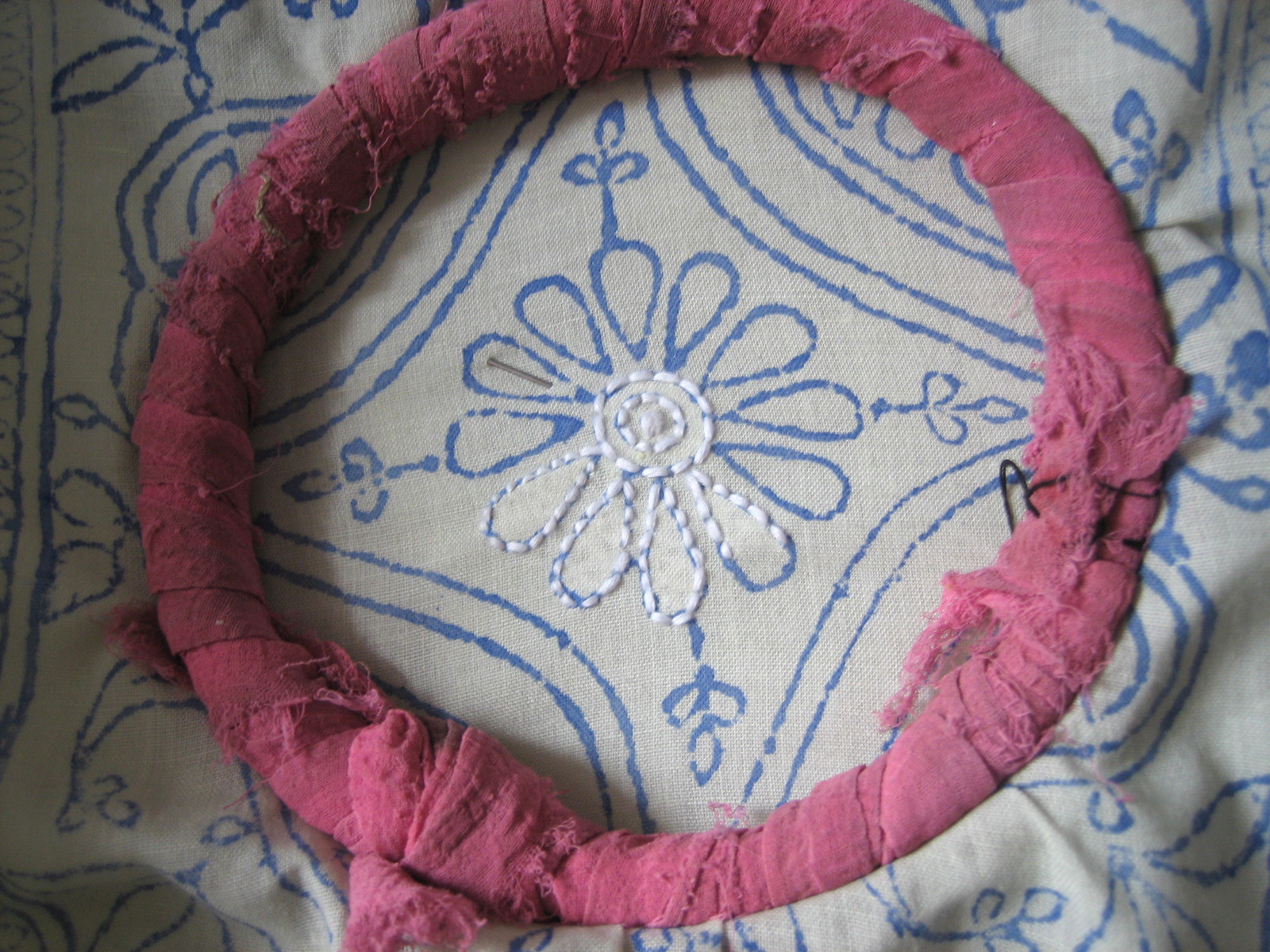
Chikankari is white-on-white, or very nearly: shadow work, French knots and open lattice stitches worked in cotton thread on fine muslin, so that the cloth itself seems to carry the pattern. Lucknow is its home, and the tradition credits Nur Jahan, the Persian-born empress and wife of Jahangir, with bringing the needlework that became it to the Mughal court in the early seventeenth century — she is said to have brought embroiderers from Persia and encouraged local artisans to learn the style. Whatever the exact origin, the craft settled in Lucknow and stayed. In December 2008 the Geographical Indication Registry granted Lucknow chikankari GI status, registration number 102, recognising in law that the name belongs to the city. There are said to be more than thirty distinct stitches; an expert can tell hand-worked chikan from machine imitation by the back of the cloth in a second.
Zardozi is the opposite instinct. Where chikankari removes colour, zardozi adds metal: gold and silver wire — zar is Persian for gold, dozi for sewing — couched onto velvet, silk and satin, with sequins, beads, pearls and coiled bullion worked into the raised designs. The craft has Persian roots and flourished under the Mughals; Akbar is recorded as a patron who wanted it on garments, court tents, sword scabbards and the trappings of elephants, and the word for the workshops where it was made passed into the languages of North India. It is heavy, formal and slow — a bridal lehenga worked in zardozi can weigh what a winter coat does — and it is why the wedding clothes of the subcontinent look the way they do.
Phulkari, literally “flower work”, belongs to Punjab. It is dense darning stitch in untwisted floss silk, worked from the back of coarse handspun khaddar so that the geometry blooms on the front in blocks of colour; when the embroidery covers the whole ground it is called a bagh, a garden. It was made by women for their own families — for weddings, for daughters — and only became a commercial craft in the last century. Phulkari was granted a Geographical Indication tag on 21 October 2010, after a five-year effort led by the Punjab Small Industries and Export Corporation. The tag has not, by the craftspeople’s own account, protected them from machine-made imitations sold under the same name, which is its own lesson about the distance between a label and a thing.
Why does any of this matter to software? Because a garment-detection model learns what it is shown, and what it is mostly shown is Western e-commerce photography. It learns dresses, blazers, trainers and denim with great precision, and it learns “embroidered” as one flat attribute that is either present or not. It cannot tell a hand-worked chikan kurta from a printed imitation of one, or zardozi from sequin tape, or a phulkari bagh from a floral print. And so it cannot help with the things that actually matter about those garments: their care — metal thread and a washing machine do not meet, and chikan muslin should never see a hot cycle; their value, which differs by an order of magnitude between hand and machine work; and the honest description of what a person owns.
The three also differ in how they are made, which is what a camera has to learn to see. Chikankari is worked on the cloth after it is block-printed with the design in a washable dye, stitch by stitch, and then washed so only the thread remains; the tell is the back, where a hand-worked piece shows the paths between motifs and a machine piece shows a uniform, mechanical underside. Zardozi is worked on cloth stretched drum-tight over a wooden frame, with a hooked needle from above and the metal thread fed from below, and its tell is weight and the slight irregularity of couched wire. Phulkari is counted-thread work from the reverse, so the front shows only the long floats of floss and the back only tiny dots of the stitches’ turns. Each craft leaves a signature in its construction, front and back, and it is that signature — not the motif — that separates the real thing from a print of it.
This is not a niche concern. It is a large fraction of what is actually in wardrobes across South Asia, the Gulf and the diaspora — hundreds of millions of people whose formal clothes are embroidered in ways the standard datasets have never seen. A wardrobe app that can name a French cuff but not a phulkari bagh has decided who it is for, whether or not it meant to.
ZIMRICS’s garment ontology carries these crafts as first-class attributes — not “embroidered” but chikankari, zardozi, phulkari, and the other traditions of the region — and its garment engine is trained on photographs of them, taken from the front and, where it matters, from the back. That was a deliberate choice about whose clothes count as data, and it was one of the first choices made. It costs more. It also means the app can tell a wearer that the kurta in the photograph is hand-worked shadow stitch, that it wants a cold hand wash and a shaded line, and that it is worth rather more than the price she paid for it.
There is a broader argument here about what “AI for fashion” has meant so far, and it is not a comfortable one. The models are trained where the images are, and the images are where the e-commerce is, and so the technology has learned a narrow idea of clothing very well and a wide one hardly at all. Fixing that is not a matter of scale. It is a matter of deciding, garment by garment and craft by craft, that the wardrobes of Lucknow and Lahore and Patiala are worth photographing properly. The stitches were always there to be read. Somebody has to teach the camera the alphabet.
Sources
- Chikankari — history and the 2008 Lucknow Geographical Indication (Wikipedia)
- Cultural India — Zardozi embroidery: history and methods
- Digital GI / One District One Product — Phulkari (GI tag, 21 October 2010)
- The Tribune — The Phulkari crisis: GI tag fails to protect craftspersons against machine-made imitations
- The Heritage Lab — Chikankari embroidery: painting with the needle